
Dubai Real Estate 2030–2040: Why Demand Will Outrun Supply
As Dubai looks toward 2030 and beyond, one question continues to surface among international investors: Will Dubai build too much real estate?
This concern often arises from observing the city’s rapid development pace—new master-planned communities, frequent off-plan launches, and a skyline that never seems to stop expanding. However, when Dubai’s future is evaluated through the lens of population growth, economic strategy, and long-term urban planning, a very different conclusion emerges.
The reality is that Dubai is not building blindly. It is building in anticipation of demand that is still unfolding. Between 2030 and 2040, the forces driving population growth, job creation, global migration, and lifestyle relocation are expected to intensify. When these factors are properly accounted for, it becomes clear why housing demand is likely to continue outpacing supply in the decades ahead.

Dubai’s Evolution: From Fast Growth to Planned Scale
Dubai’s real estate story is not simply about rapid expansion—it is about controlled transformation. In the early 2000s, Dubai was a fast-growing regional city experimenting with freehold ownership and international real estate investment. Supply surged quickly, but regulation and planning frameworks were still evolving.
Over the past two decades, Dubai matured into a highly regulated global property market, introducing escrow laws, strict developer requirements, registered broker systems, and long-term master planning. Each real estate cycle refined the system further. Today, Dubai does not build randomly; it builds with multi-decade horizons in mind.
This shift matters because cities that plan for scale behave very differently from cities that grow reactively. Dubai’s supply pipeline is increasingly aligned with infrastructure delivery, economic corridors, and demographic forecasts rather than short-term speculation.
Population Growth Toward 2030–2040: The Core Demand Driver
Dubai’s population growth is the single most important variable investors underestimate. In just over two decades, Dubai’s population grew from under one million to more than 4 million residents today. This growth did not occur naturally—it was designed through policy, economic incentives, and global positioning.
Looking ahead to 2030–2040, population growth is expected to continue as Dubai strengthens its role as:
a global business hub,
a tax-efficient base for professionals and entrepreneurs,
a lifestyle destination for long-term relocation,
a regional headquarters for multinational companies.
What makes Dubai unique is not only the number of people arriving, but the profile of those people. Skilled professionals, business owners, families, and high-income earners generate significantly more housing demand per capita than transient populations. As Dubai’s demographic composition matures, demand shifts toward larger homes, ownership rather than renting, and longer holding periods, all of which increase pressure on supply.


+971 50 4784367 - Starting From $200,000
20% Down Payment | 1% Monthly Installments
Expected ROI: 8-10%
Economic Expansion and Job Creation Multiply Housing Demand
Dubai’s long-term real estate demand cannot be separated from its economic strategy. The Dubai Economic Agenda (D33) aims to double the size of Dubai’s economy by 2033, positioning the city among the world’s top global economic hubs.
This level of economic expansion implies:
sustained job creation across technology, finance, logistics, healthcare, tourism, AI, and creative industries,
increased inflow of global talent,
rising household formation as professionals settle long-term.
Each new job created does not generate one unit of demand—it generates layers of housing demand, including rentals, ownership, family housing, and short-term accommodation. As employment becomes more specialized and long-term, housing demand becomes more durable and less cyclical.
Why Supply Will Struggle to Keep Pace
While Dubai continues to deliver new residential projects, supply faces natural constraints that limit its ability to fully match demand growth.
First, not all supply is created equal. New homes are distributed unevenly across locations, price segments, and community types. High-demand, well-connected, lifestyle-driven areas consistently experience stronger absorption than peripheral or poorly positioned developments.
Second, infrastructure delivery, zoning, and master planning slow the pace at which truly desirable supply can be brought online. While headlines may focus on total unit counts, the reality is that quality, location, and livability determine whether supply meets demand.
Third, as Dubai transitions from a transient city to a long-term living destination, housing demand per household increases. Families require more space, better amenities, and community infrastructure—factors that reduce density and effectively constrain supply.
Launch-Day Sellouts Signal Structural Demand
One of the clearest indicators that demand continues to outrun supply is launch-day absorption.
In recent years, Dubai has repeatedly witnessed:
off-plan projects selling out on launch day,
pricing increases applied within hours or days,
early access allocations fully absorbed before public release.
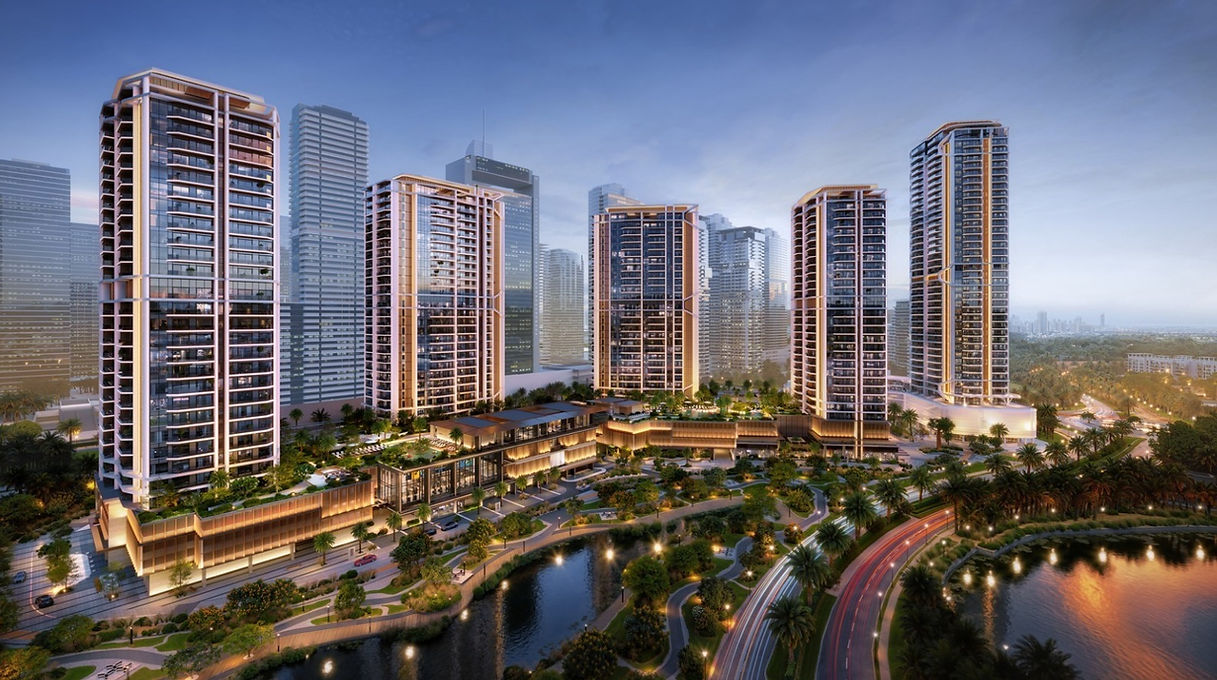
Developments by major players such as DAMAC often demonstrate this pattern, particularly when projects align with lifestyle demand, branding, and competitive entry pricing. These outcomes are not marketing anomalies; they are market signals.
Oversupplied markets do not experience immediate sellouts or aggressive tiered pricing increases. Dubai does—because demand is front-loaded and global.
Early EOI Investors Benefit From a Demand-Driven Market
As demand accelerates, timing becomes a decisive advantage.
Investors who submit early Expressions of Interest (EOIs) consistently secure:
lower entry prices,
better unit selection,
stronger capital appreciation potential.
In a market where pricing is adjusted dynamically based on demand, entering early is not speculative—it is defensive positioning. Investors who wait for confirmation often find themselves paying a premium for the same asset.
This dynamic is likely to intensify toward 2030–2040 as population growth and investor participation increase.
+971 50 4784367 - Starting From $790,000
20% Down Payment | 1% Monthly Installments
Expected ROI: 8%
Dubai 2040 Urban Master Plan: Building for More People, Not Excess Supply
Dubai’s 2040 Urban Master Plan explicitly assumes continued population growth. The plan focuses on:
expanding residential zones strategically,
improving transport connectivity,
increasing green and lifestyle spaces,
balancing density across districts.
Importantly, the plan does not aim to saturate the market. It aims to support millions of additional residents while maintaining quality of life. Supply is phased, monitored, and adjusted in line with demographic and economic data.
If current trends persist, Dubai’s population by 2040 will require substantially more housing stock than exists today—even accounting for planned developments.
Why Demand Will Continue to Outrun Supply
When population growth, job creation, lifestyle migration, and long-term planning are evaluated together, a clear picture emerges:
Dubai’s challenge is not excess supply.
It is keeping pace with sustained, structural demand.
Demand is global, diversified, and increasingly long-term. Supply, while significant, is constrained by location quality, infrastructure readiness, and planning discipline.
This imbalance is precisely what supports:
price stability,
long-term appreciation,
strong rental demand,
and rapid absorption of new projects.
The Investor Takeaway for 2030–2040
For investors looking ahead to 2030–2040, the conclusion is not speculative—it is strategic.
Dubai is positioning itself for more people, more businesses, and more global relevance. Real estate demand is a direct byproduct of that vision. While new homes will continue to be built, they are unlikely to outpace the city’s growth trajectory.
The investors who benefit most from this cycle will be those who understand that Dubai’s future is not about counting buildings—but about understanding who is coming, why they are staying, and how long they plan to stay.
For long-term investors, Dubai real estate is not approaching saturation.
It is approaching its next phase of structural demand growth.
Author: Ozlem Ucar - Senior Off-plan Specialist

+971 50 4784367
Full Sea View Luxury Apartments Starting From $816,800
20% Down Payment | 1% Monthly Installments
Expected ROI: 8%
